Nobody Promoted Him. He Was Already Leading the Entire Team Without a Title.
Leadership is not a position. It is a behavioral event. It happens the moment someone watches what you do and quietly changes what they do because of it.

There was a manager at a company I worked with who never gave motivational speeches. Never sent inspirational emails on Monday morning. Never hosted team-building exercises or put leadership quotes on the conference room wall.
What he did was show up at 6:30 every morning and work quietly for ninety minutes before the rest of the team arrived. He did not announce this. He did not mention it. He did not post about it. He just did it. Every day. For years.
Slowly, something happened that nobody planned. One team member started coming in at 7. Then another. Then a third. Within six months, half the team had voluntarily shifted their schedules earlier. Nobody was asked. Nobody was incentivized. Nobody was told. They watched a man do something consistently, and their behavior changed because of it.
That is leadership. Not the speech. Not the title. Not the corner office. The behavioral event where someone watches what you do and quietly decides to do something different because of it.
Most leadership content is about how to manage people, how to communicate vision, how to "inspire." That is management advice wearing a leadership costume. Real leadership is simpler and harder: be the person whose behavior is worth copying, and be that person consistently enough that people actually copy it.
Leadership is not about your title. It is about who changed because they watched you.
Join the LuminariesHow does leadership actually spread through behavior?
Albert Bandura's social learning theory, developed through decades of research at Stanford, demonstrated that humans acquire new behaviors primarily through observation, not instruction. The most famous study, the Bobo doll experiment, showed that children who watched an adult behave aggressively toward a doll reproduced the same aggressive behaviors when given the opportunity, even without being told or encouraged to do so. The learning happened through watching, not through teaching.
This mechanism does not stop in childhood. Adults learn through observation constantly, and most of it happens below conscious awareness. You do not decide to model someone's behavior. Your mirror neuron system detects the pattern, encodes it, and makes it available for reproduction. The person you eat lunch with every day is shaping your food choices. The colleague who stays calm under pressure is teaching you to stay calm under pressure. The friend who complains about everything is training you to see complaints as a valid social currency.
You are already leading or being led. The question is whether you are doing either one on purpose.
A 2012 study published in the Journal of Applied Psychology found that leader behavioral consistency was a stronger predictor of team performance than leader competence, communication skills, or strategic vision. Teams did not perform better when they had the smartest leader or the most charismatic one. They performed better when they had the most consistent one. Consistency creates predictability. Predictability creates trust. Trust creates the psychological safety that allows people to take risks, ask for help, and operate at their actual capacity instead of performing safety.
The mechanism is specific: reliability creates trust. Trust creates attention. Attention creates modeling. Modeling creates behavioral change. That chain is leadership. It does not require authority. It requires being the same person on Tuesday that you were on Monday, and being that person visibly enough that other people can see the pattern and copy it.
The most influential person in any room is the one nobody has to manage. That could be you.
Join the LuminariesWhat is the difference between being impressive and being worth following?
There are people in every organization, every community, every family who are impressive. They have the credentials, the achievements, the résumé. People admire them from a distance. They are respected.
Then there are people who are influential. They may or may not be impressive by conventional standards. But something about the way they operate makes other people change. Not through persuasion. Not through instruction. Through the quiet force of consistent behavior that creates a new norm in whatever room they occupy.
The difference is visibility of method.
Impressive people show you the result. The promotion, the body, the business, the achievement. You see what they built. You do not see how they built it. The distance between their result and your current position feels uncrossable, so you admire them and stay where you are.
Influential people show you the process. The boring morning routine. The specific way they handle conflict. The exact method they use to prioritize. The way they respond when they fail. You see how they operate, and because the method is visible, you can copy it. Not the result. The behavior. And the behavior, repeated over time, produces its own results.
This is the Luminary distinction between performance and leadership. Performance says "look at what I achieved." Leadership says "here is exactly how I operate, and you can do the same thing." Performance creates admirers. Leadership creates other leaders.
Research on observational learning and self-efficacy shows that people are most likely to attempt a new behavior when they observe a model who is similar to them succeeding at it. Not a model who is extraordinary. A model who is relatable. The manager who is brilliant but seems to operate on a different level does not produce behavioral change in his team. The manager who is good and makes his methods visible does. Because "visible method from someone like me" is the formula that converts observation into action.
This is why ego kills leadership. The leader who needs credit, who needs to be the smartest person in the room, who needs the team to know how hard they work, is performing impressiveness. The leader who operates consistently, makes their methods visible, and does not require acknowledgment is creating behavioral contagion. One fills a room. The other changes it.
You do not need a title to lead. You need behavior worth copying. Start here.
Join the Luminaries
How do you know if you are actually leading without a title?
Here is the question that separates leaders from people with titles: can someone copy what you are doing based on what they can see?
Not what you tell them. Not the advice you give. Not the vision you cast. What they can observe from watching how you actually operate on a normal day.
If the answer is no, you are not leading. You might be managing. You might be impressive. You might be admired. But you are not producing the specific behavioral event where another person changes because they watched you.
Research on behavioral contagion in organizational settings, published in the Academy of Management Review, found that leaders who modeled specific behaviors (not just talked about values) produced those same behaviors in their teams at rates 3-4 times higher than leaders who communicated the same values verbally without modeling them. Telling your team to be punctual while you arrive late teaches lateness. Telling your team to take ownership while you micromanage teaches dependence. Telling your team to be honest while you avoid hard conversations teaches avoidance. The team does not listen to what you say. They watch what you do. And they reproduce it with frightening accuracy.
Here is what Luminary leadership looks like in practice.
First, your methods are visible. You do not hide how you work. You do not create mystery around your process. If someone asked how you prioritize your morning, you could show them the exact system. If someone asked how you handle a failure, you could describe the exact sequence. The visibility is the gift. It turns your behavior into a usable path.
Second, your behavior is consistent. Not perfect. Consistent. The team does not need you to be flawless. They need you to be predictable in the ways that matter: how you respond to stress, how you handle conflict, how you treat people when things go wrong. Consistency is what allows the modeling to occur. You cannot copy a pattern that keeps changing.
Third, your ego is absent from the equation. The moment you need your team to know that you are the reason things work, you have shifted from leadership to performance. Luminary leadership does not require credit. It does not require recognition. It requires doing the thing so consistently that other people start doing it too, and it does not matter whether they know where they learned it.
The most influential person in any room is not the one talking the most. It is the one whose behavior other people are unconsciously modeling. You can be that person with no title, no authority, no platform. All you need is behavior worth copying and the discipline to repeat it until it becomes contagious.
That is what Luminaries mean by leading by usable example. Not impressive. Not admirable. Usable. Copyable. Visible enough to follow. Consistent enough to trust.
Luminaries lead by usable example. Not by instruction. Not by performance. By consistency.
Join the LuminariesYou do not need a title to lead. You do not need an audience. You do not need permission.
You need behavior worth copying. You need consistency that creates trust. You need methods visible enough that someone watching you can replicate them without asking.
The manager who shows up at 6:30 and works quietly changed half his team's schedules without saying a word. Not because he told them to. Because behavior is contagious, and consistency is the most powerful form of communication there is.
Somewhere, right now, someone is watching how you operate. They are deciding, without knowing they are deciding, whether your behavior is worth adopting. They are not listening to your advice. They are watching your actions.
Make the actions worth watching.
Shine on!
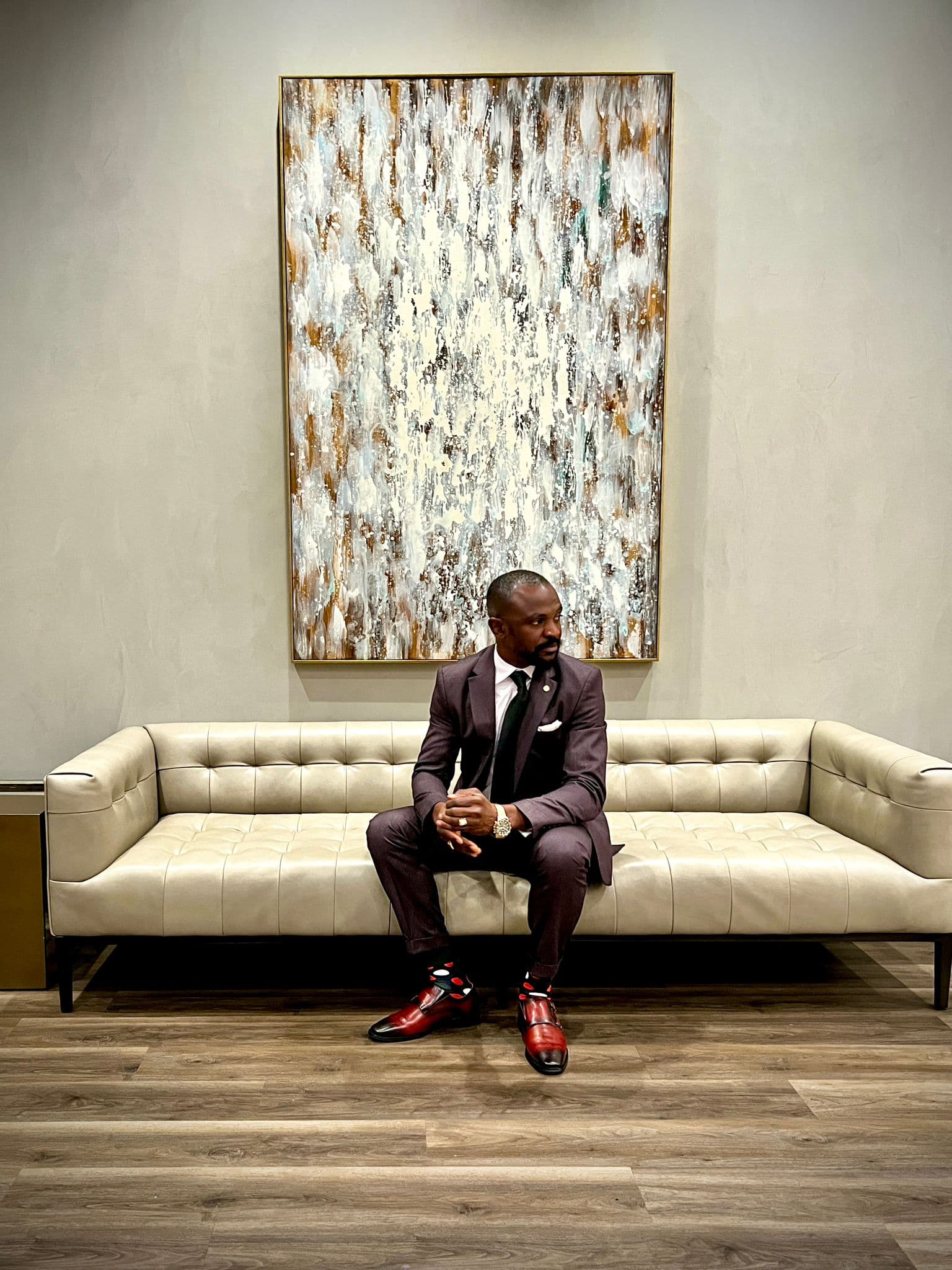
Written by
Abraham Ojo
Abraham Ojo founded Luminaries, an online community for people who refuse to drift through life on autopilot, and hosts the We Go Again podcast. He began as a founding member and international correspondent at Expoze Magazines, later taught himself cybersecurity, and has written journals on cybersecurity, artificial intelligence, and post-quantum cryptography. He writes every post on this blog himself.
Keep reading on this topic
0 Comments
No approved comments yet. Start the conversation.
Leave a Reply
Your email address will not be published. Required fields are marked *
Become a Luminary
This isn't just content. It's a mirror for who you're becoming. Join a community that values discipline over motivation, action over wishing, and progress over perfection.


